System development isn’t just about coding—it’s about creating intelligent, scalable, and future-ready solutions that drive real-world impact. Whether you’re building software, automating business processes, or designing complex IT ecosystems, mastering system development is the key to innovation and efficiency in today’s digital world.




Understanding the Core of System Development

At its heart, system development refers to the structured process of designing, building, testing, and deploying information systems to meet specific organizational or user needs. It’s not limited to software alone—it spans hardware, networks, databases, user interfaces, and the integration of all components into a cohesive, functional whole.
What Exactly Is System Development?
System development is a multidisciplinary field that combines principles from computer science, engineering, project management, and business analysis. It involves a series of phases—from identifying requirements to maintaining the system post-deployment—ensuring that the final product aligns with user expectations and technical standards.
- It includes both custom-built and off-the-shelf system implementations.
- It applies to enterprise resource planning (ERP), customer relationship management (CRM), and embedded systems.
- It often follows formal methodologies like Waterfall, Agile, or DevOps.
“System development transforms abstract ideas into tangible, operational technology solutions.” — IEEE Computer Society
Key Objectives of System Development
The primary goal of system development is to deliver reliable, efficient, and secure systems that solve real problems. This involves balancing functionality, performance, cost, and scalability.
- Ensure system reliability and fault tolerance.
- Maximize user satisfaction through intuitive design.
- Minimize development time and operational costs.
Successful system development also anticipates future needs, allowing for upgrades and integration with emerging technologies. For more insights, visit the official guide by Software Engineering Institute (SEI).
The 7-Phase System Development Life Cycle (SDLC)
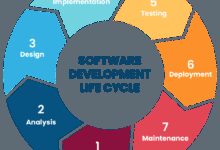
The System Development Life Cycle (SDLC) is the backbone of any structured approach to building systems. It provides a clear roadmap from concept to retirement, ensuring quality, accountability, and alignment with business goals.
Phase 1: Requirement Analysis
This initial phase involves gathering, analyzing, and documenting what the system must do. Stakeholders—including clients, users, and technical teams—collaborate to define functional and non-functional requirements.
- Functional requirements specify actions the system should perform (e.g., user login, data processing).
- Non-functional requirements cover performance, security, scalability, and usability.
- Tools like use case diagrams, user stories, and requirement traceability matrices are commonly used.
Accurate requirement analysis prevents costly changes later. According to the IEEE Standards Association, up to 70% of project failures stem from poor requirement gathering.
Phase 2: System Design
Once requirements are clear, the next step is designing the system architecture. This phase translates user needs into technical blueprints.
- Includes high-level design (HLD) and low-level design (LLD).
- HLD defines system components, data flow, and technology stack.
- LLD details database schemas, API structures, and module interactions.
Design patterns such as MVC (Model-View-Controller) or microservices architecture are often applied here. A well-documented design ensures consistency and reduces development ambiguity.
Phase 3: Implementation (Coding)
This is where the actual system development takes place. Developers write code based on the design specifications using programming languages like Java, Python, or C#.
- Code is written in modules or sprints, especially in Agile environments.
- Version control systems like Git are essential for collaboration.
- Continuous integration (CI) tools automate code merging and testing.
Best practices such as code reviews, modular programming, and documentation are critical. Resources from MDN Web Docs can help developers adhere to coding standards.
Popular Methodologies in System Development
Different projects require different approaches. Choosing the right methodology can make or break a system development project.
Waterfall Model: The Traditional Approach
The Waterfall model is a linear, sequential approach where each phase must be completed before the next begins.
- Ideal for projects with well-defined, unchanging requirements.
- Phases flow downward like a waterfall: requirements → design → implementation → testing → deployment.
- Easy to manage due to rigid structure and clear milestones.
However, it lacks flexibility. Changes in later stages can be expensive and time-consuming. It’s still used in industries like aerospace and defense where documentation and compliance are critical.
Agile: The Modern, Iterative Framework
Agile is the most widely adopted methodology in modern system development. It emphasizes flexibility, collaboration, and customer feedback.
- Work is divided into short iterations (sprints), typically 2-4 weeks long.
- Teams deliver working software incrementally.
- Regular stand-ups, retrospectives, and demos ensure continuous improvement.
Agile promotes adaptability. According to the Agile Alliance, over 70% of software teams use Agile or hybrid models. Scrum and Kanban are popular Agile frameworks.
DevOps: Bridging Development and Operations
DevOps extends Agile by integrating development (Dev) and IT operations (Ops) to accelerate delivery and improve reliability.
- Automates testing, deployment, and monitoring.
- Uses tools like Jenkins, Docker, Kubernetes, and Ansible.
- Enables continuous delivery (CD) and continuous deployment (CD).
DevOps reduces time-to-market and enhances system stability. Companies like Amazon and Netflix rely on DevOps for rapid, reliable updates.
The Role of System Analysis in Development
System analysis is a critical precursor and ongoing component of system development. It ensures that the right problem is being solved in the most effective way.
What Is System Analysis?
System analysis involves evaluating existing systems or processes to identify inefficiencies and define how a new system can improve them.
- Analysts conduct interviews, observe workflows, and analyze data.
- They create process models using tools like BPMN (Business Process Model and Notation).
- Feasibility studies assess technical, economic, and operational viability.
Without proper analysis, even the most technically sound system may fail to meet business needs.
Tools and Techniques Used in System Analysis
Modern system analysts use a variety of tools to gather and visualize data.
- SWOT analysis to evaluate strengths, weaknesses, opportunities, and threats.
- Data flow diagrams (DFD) to map how information moves through a system.
- Unified Modeling Language (UML) for visualizing software architecture.
Tools like Lucidchart, Microsoft Visio, and StarUML help create professional diagrams. These models serve as a communication bridge between technical and non-technical stakeholders.
Essential Technologies in Modern System Development
Technology evolves rapidly, and staying current is vital for successful system development. Today’s developers must be proficient in a wide range of tools and platforms.
Programming Languages and Frameworks
The choice of language and framework depends on the system’s purpose, performance needs, and scalability requirements.
- Python: Ideal for data-heavy systems, AI, and backend services.
- JavaScript (with Node.js): Powers full-stack web applications.
- Java and .NET: Common in enterprise-level applications.
Frameworks like Django (Python), Spring (Java), and React (JavaScript) accelerate development by providing reusable components and best practices.
Cloud Computing and System Development
Cloud platforms have revolutionized system development by offering scalable, on-demand resources.
- Providers like AWS, Microsoft Azure, and Google Cloud Platform (GCP) offer infrastructure as a service (IaaS), platform as a service (PaaS), and software as a service (SaaS).
- Cloud-native development enables microservices, serverless computing, and containerization.
- Benefits include cost efficiency, global accessibility, and disaster recovery.
According to Gartner, over 90% of enterprises will rely on cloud-native platforms by 2025.
Database Systems and Data Management
No system development is complete without a robust data management strategy. Databases store, retrieve, and manage the information that powers applications.
- Relational databases (e.g., MySQL, PostgreSQL) are ideal for structured data.
- NoSQL databases (e.g., MongoDB, Cassandra) handle unstructured or semi-structured data at scale.
- ORM (Object-Relational Mapping) tools like Hibernate or Sequelize simplify database interactions.
Data integrity, backup strategies, and query optimization are essential for performance and security.
Quality Assurance and Testing in System Development
Testing is not an afterthought—it’s a core component of system development that ensures reliability, security, and user satisfaction.
Types of Testing in System Development
Different testing levels validate various aspects of the system.
- Unit Testing: Tests individual components or functions.
- Integration Testing: Ensures modules work together seamlessly.
- System Testing: Validates the complete, integrated system against requirements.
- Acceptance Testing: Conducted by users to confirm the system meets their needs.
Automated testing tools like Selenium, JUnit, and Postman improve efficiency and coverage.
Importance of Security Testing
With rising cyber threats, security testing is non-negotiable in system development.
- Identifies vulnerabilities like SQL injection, cross-site scripting (XSS), and broken authentication.
- Penetration testing simulates real-world attacks to assess system resilience.
- Compliance with standards like ISO/IEC 27001 and GDPR is mandatory in many industries.
Organizations must adopt a ‘security by design’ approach, integrating security checks from the earliest stages. The OWASP Foundation provides critical resources for secure development.
Maintenance and Evolution of Developed Systems
A system’s lifecycle doesn’t end at deployment. Ongoing maintenance ensures longevity, relevance, and performance.
Types of System Maintenance
Maintenance activities fall into four main categories:
- Corrective Maintenance: Fixing bugs and errors discovered post-deployment.
- Adaptive Maintenance: Updating the system to work with new environments (e.g., new OS, hardware).
- Perfective Maintenance: Enhancing features or performance based on user feedback.
- Preventive Maintenance: Proactively improving system reliability and efficiency.
Regular updates and patches are crucial to prevent technical debt and security risks.
System Upgrades and Modernization
As technology evolves, so must systems. Modernization involves upgrading legacy systems to leverage new capabilities.
- May include migrating to the cloud, adopting microservices, or re-architecting monolithic applications.
- Refactoring code improves readability and maintainability without changing functionality.
- Replatforming moves applications to modern infrastructure with minimal changes.
According to McKinsey, companies that invest in system modernization see up to 30% improvement in operational efficiency.
Emerging Trends Shaping the Future of System Development
The field of system development is constantly evolving. Staying ahead requires awareness of emerging trends and technologies.
Artificial Intelligence and Machine Learning Integration
AI and ML are transforming system development by enabling intelligent automation and predictive analytics.
- AI-powered systems can learn from user behavior and adapt in real time.
- ML models are integrated into recommendation engines, fraud detection, and chatbots.
- AutoML tools allow developers to build models without deep data science expertise.
Platforms like TensorFlow and PyTorch are widely used in AI-driven system development.
Low-Code and No-Code Development Platforms
These platforms democratize system development by enabling non-programmers to build applications using visual interfaces.
- Tools like Microsoft Power Apps, OutSystems, and Bubble reduce development time.
- They are ideal for prototyping, internal tools, and small-scale applications.
- However, they may lack the flexibility and scalability of custom-coded solutions.
Gartner predicts that by 2025, 70% of new applications will use low-code/no-code platforms.
Blockchain and Decentralized Systems
Blockchain technology is enabling secure, transparent, and tamper-proof systems.
- Used in supply chain tracking, digital identity, and smart contracts.
- Decentralized applications (dApps) run on peer-to-peer networks instead of centralized servers.
- Challenges include scalability, energy consumption, and regulatory compliance.
Blockchain is still emerging but holds promise for trustless, distributed system development.
What is the main goal of system development?
The main goal of system development is to create reliable, efficient, and scalable systems that meet user requirements and solve real-world problems. It involves a structured process of planning, designing, building, testing, and maintaining information systems.
What are the key phases in the system development life cycle (SDLC)?
The key phases are: 1) Requirement Analysis, 2) System Design, 3) Implementation, 4) Testing, 5) Deployment, 6) Maintenance, and 7) Evaluation/Retirement. Each phase ensures the system is developed systematically and meets quality standards.
Which methodology is best for system development?
There is no one-size-fits-all answer. Agile is best for dynamic projects with changing requirements, Waterfall suits projects with fixed scope, and DevOps is ideal for continuous delivery. The choice depends on project size, complexity, and organizational culture.
Why is testing important in system development?
Testing ensures the system is free of defects, performs well under load, and meets security and usability standards. It reduces the risk of failures, enhances user satisfaction, and lowers long-term maintenance costs.
How is AI impacting system development?
AI is automating code generation, improving testing through intelligent bots, enabling predictive maintenance, and powering smart features like natural language processing and recommendation engines. It’s making systems more adaptive and user-centric.
System development is a dynamic and essential discipline in the digital age. From defining requirements to maintaining evolved systems, every phase plays a crucial role in delivering value. By embracing proven methodologies like Agile and DevOps, leveraging modern technologies such as cloud computing and AI, and prioritizing quality and security, organizations can build systems that are not only functional but future-ready. The future of system development lies in innovation, collaboration, and continuous improvement—ensuring that technology remains a powerful enabler of progress.
Further Reading: